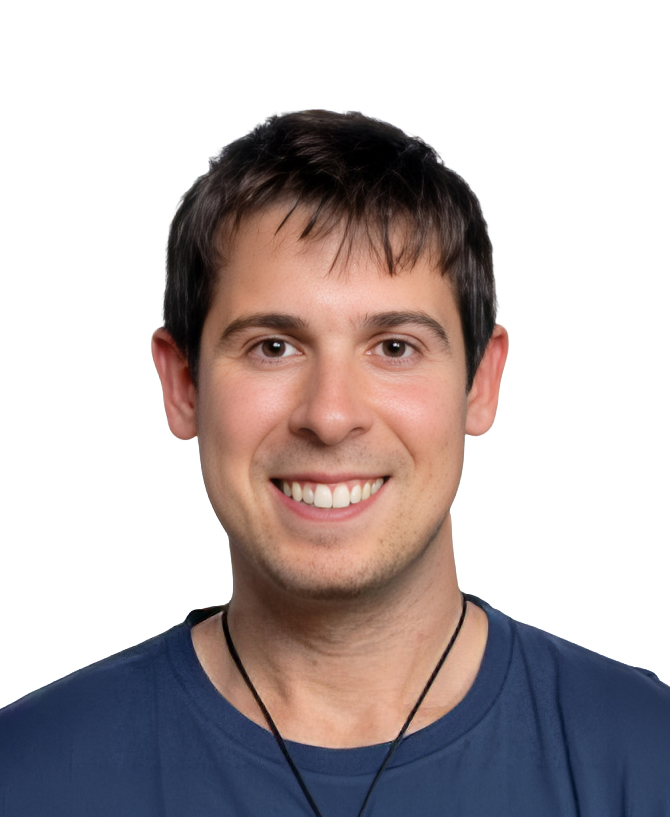
About Me
Welcome! I am Dr. Abel de Burgos Sierra, currently an ESO Postdoctoral Fellow at the European Southern Observatory in Santiago, Chile. In this position, I dedicate my research time on understanding the evolutionary nature, as well as the physical, chemical, and binary properties of massive stars. To accomplish this, I frequently utilize open clusters and stellar associations as natural laboratories to test modern stellar evolutionary theories. I also support observatory operations as a Night Astronomer for the Very Large Telescope (VLT) and an Instrument Fellow for the 4MOST and soon UVES instruments. My scientific trajectory began with a B.Sc. in Physics and an M.Sc. in Astrophysics from the Complutense University of Madrid. I then earned my Ph.D. in Astrophysics summa cum laude from the Instituto de Astrofísica de Canarias (IAC) and the University of La Laguna in 2024. Throughout my career, I have cultivated a strong technical and observational background, previously serving as a support astronomer at the Nordic Optical Telescope and the Isaac Newton Telescope in La Palma. I also gained valuable space mission and operational experience during several roles at the European Space Agency (ESA), working on the Mars Express mission and the CESAR educational project. Today, I proudly apply this background as an active collaborator in major international astronomical efforts, including the IACOB project, and the 4MOST-4MIDABLE and WEAVE-SCIP low-resolution spectroscopic surveys.